
75th year, June / 1997-2
75th year, June / 1997-2
|
LABOR Training and Information Magazine of the World Confederation of Labour Editorial Address: Editorial Board: Secretariat: Responsible editor: You may borrow articles from LABOR-MAgazine on the understanding that you acknowledge the source and send us a complementary copy. Nr. June 1997 |
Contents
|
 75th year, June / 1997-2
http://www.cmt-wcl.org/en/pubs/labor97-2.html
info@cmt-wcl.org
 Editorial
  Top
Top
The world we are living in sacrifices labour without any scruples whatsoever in order to obtain higher turnovers and profits. Only a small group benefits from this. What is happening today to the workers of Renault in Belgium or of the shipyards in Gdansk, what happened before to the workers of Hoover, Memorex, Philips and many others more, shows abundantly clearly that the boards of directors are taking the workers behind the production processes less than ever into consideration.
The liberalisation of the world economy has stiffened the competition between the companies, initiating so a process in which the employers respect less and less the workers’ rights and treat them as commodities. As playthings of new industrial policies the workers and women workers throughout the world are compelled to subject to a higher paces of work and to greater contractual and time flexibility while accepting wage decreases. In South Korea a new generation of entrepreneurs exerted strong pressure to get a labour law enacted which destroys the already minimal social acquirements. The adoption of this law fits in with this logic to raise the profitability to the detriment of social and human aspects. The new labour laws which recently saw, after long years of discussions, the light of day in several French-speaking African countries, favour unmistakably the requirements of production rather than the workers. The reforms indeed give the employers more elbowroom: freedom of recruitment, facilities for the human resources management thanks to contracts of limited duration or for restructuring processes thanks to dismissals for economic reasons.
The negative and sustained pressure on the working conditions will continue as long as the economy based on neo-liberal policies continues its logic of profitability at any price. The social dimension and cultural diversity are deliberately left out of the uniform thinking.
The dismantlement of the working conditions and the dualisation of society cannot be checked unless an international social legislation is developed and strictly applied, unless the companies observe a code of conduct and unless all the trade agreements include the prerequisite to strictly respect the core standards of the ILO, ie the promotion of the freedom of association, the ban on discrimination and forced labour, and the eradication of child labour.
The more pressure we exert on the government ¾ through our international trade union solidarity ¾ to strengthen the social dimension of the world economy, the better the chance that labour will be redistributed worldwide and better jobs will be created. Long live the international trade union solidarity.
Willy Thys, secretary-general of the WCL
75th
year, June / 1997-2
http://www.cmt-wcl.org/en/pubs/labor97-2.html
info@cmt-wcl.org
InterviewTop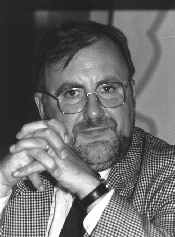 In
October 1996, the Confederal Board of the WCL appointed the
Belgian Willy Thys sixth
secretary-general of the WCL. He took up office on 1 December
1996. Willy Thys started his trade union career in 1963, when he
was elected shop steward of the ACV-CSC at Belgian Rail, which
had employed him at a very young age. In 1970, he was accepted in
the executive committee of the railway workers’ federation
in the ACV-CSC. Six years later, he was appointed
secretary-general of the Belgian Christian federation of
communication and cultural workers. He held that office until
1987, when he was elected national secretary of the ACV-CSC.
Willy Thys graduated in social and economic sciences at
FOPES/UCL, a Belgian institute for adult education. He was born
on 18 June 1943, is married and has three children.
In
October 1996, the Confederal Board of the WCL appointed the
Belgian Willy Thys sixth
secretary-general of the WCL. He took up office on 1 December
1996. Willy Thys started his trade union career in 1963, when he
was elected shop steward of the ACV-CSC at Belgian Rail, which
had employed him at a very young age. In 1970, he was accepted in
the executive committee of the railway workers’ federation
in the ACV-CSC. Six years later, he was appointed
secretary-general of the Belgian Christian federation of
communication and cultural workers. He held that office until
1987, when he was elected national secretary of the ACV-CSC.
Willy Thys graduated in social and economic sciences at
FOPES/UCL, a Belgian institute for adult education. He was born
on 18 June 1943, is married and has three children.
Labor: First, let us talk about your career: how did you get interested in trade unionism?
Willy Thys: For social reasons I took my first job at a very young age, at 14. Fortunately, I got in touch with activists of the ACV-CSC. They taught me as a young worker the meaning of true solidarity and dignity, laying so the foundation of my trade union commitment. I was also active in the youth movement. So, I have always been committed. I found society unfair, that we should change it and struggle for a better one.
Labor: Your new job demands very keen interest in international issues.
Willy Thys: I have always been interested in international issues. This started when I landed in a responsible position in the railway sector, thanks to the action of FIOST, the international trade federation of transport workers in the WCL. My participation in the joint committees at the level of the EEC and contacts with the other continents made me aware of the fact that international solidarity and the unionisation of the workers at world level would solve the problems. This awareness grows, of course, if as a trade unionist with political responsibilities one is confronted with the globalising economy, if one has to be able to operate efficiently at world level while being aware of the competition system sets the workers against each other. The international trade union movement, on the other hand, has to be an element of solidarity.
Labor: One is often inclined to think that trade union structures are rather tailored to action nationwide. Does this not hamper the international trade union work?
Willy Thys: This is indeed the case. But I think that things are gradually getting structured, maybe not sufficiently, but the first steps have been taken. If we look at the evolution in the ETUC, for instance, we can say that progress has been made. It is necessary, however, that the national organisations agree to enable the ETUC to take genuine action and to operate together with and within the ETUC. This is a first step. As a matter of fact, we are being more and more called upon in the context of support actions. So, people know we exist and play a prominent part. This may be less visible in the industrial countries, but to the trade unions in the developing countries international action is very important because they are confronted with more problems. A world organisation offers them the support they absolutely require to be up against all kinds of injustices, the lack of democracy and freedom, intolerable social relations such as collective dismissals, etc. We have to insist on the necessity of solidarity: the problems cannot be solved unless we remove all the obstacles such as cultural differences, racism, selfishness, individualism, etc. The international trade unions has to make sure that people can meet and talk with each other in spite of their differences. To the workers this is essential.
Labor: These are elements of the international trade union action within the WCL. But how are the contacts with the other international trade unions?
Willy Thys: It is obvious that we are not alone in the world, but it also obvious that we convey a message. In this sense we should know what we want: either we enter without a moment’s thought into a competition with the international trade unions, or we seek to co-operate and to complete one another. The ICFTU is carried rather by the industrial countries, the WCL rather by the Third World countries. So, in this respect we do not compete, but complement one another. In some cases, however, we lay different accents. It goes without saying that we act in unison in matters of trade union rights and freedoms. To international organisations such as the World Trade Organisation, the International Monetary Fund and the World bank we take convergent stands because the working of these organisations runs counter to the values we stand for as a trade union movement. We have to act in concert with regard to the centres of power.
Labor: Why no single organisation in that case?
Willy Thys: The disappearance of the WCL and its values would leave a void in the trade union movement. I am convinced that automatically a new organisation would emerge and seek to cater for the needs. So, it would be pointless to dissolve the WCL. Anyway, the conditions for a structural unity are not fulfilled, though we must never say never. The evolution of the trade union movement as a whole shows a tendency towards more pluralism. Even in countries with a traditional single trade union there are more and more problems with independent unions and trade federations. I consider this a dangerous development in that it can lead to a fragmentation of the trade union movement. This is a matter we should tackle jointly with the ICFTU, for the representativeness of the trade union movement in the large international institutions is at stake.
Labor: The Confederal Board appointed you in substitution for Carlos Custer, who resigned…
Willy Thys: Carlos resigned for personal reasons. It is true that the Statutes provide that the Confederal Board can elect a secretary-general, but this is an exceptional procedure. The Congress in Colombo will have to pronounce upon the election. Carlos had a strong impact worldwide. I will do whatever I can to consolidate this impact and to raise it afterwards.
Labor: What else do you want to achieve during your term of office?
Willy Thys: First, I deem it very important to work with people in the field, to render reality into a political stance and to pursue greater solidarity. The WCL secretariat ought to provide the workers and their organisations useful information. This can be done in optimising the computer and communication network. This is a sound ambition. That way the WCL could work even more efficiently.
Labor: Will there be a change in the relations with the ICFTU?
Willy Thys: These relations have already been outlined, and I have no problem with that. We have to continue our co-operation with the ICFTU, at least insofar as they, too, want this. If the ICFTU wishes no longer to co-operate, we cannot force them. This would be a pity, however, for it is in the interest of the workers that we take up a convergent position and combine forces.
Labor: And the relations with international organisations such as the IMF, the World Bank, etc?
Willy Thys: We are in touch with these organisations. Last January, Willy Peirens, Carlos Custer, our adviser Ronald Janssen and I visited the IMF and the World Bank. I could see that the WCL is well-known in them and that its stands are appreciated, even if our interlocutors do not agree with them. They listen to us, and I wish to point out that the fact that we could induce the IMF to take part in seminars to explain its policies to the African workers, for instance, has made it possible to influence the structural adjustment programmes for Africa and to have them modified. The IMF has indeed changed course. In the initial programmes it insisted on austerity in the field of education and health care; today it demands cuts in the defence budgets in the first place. It seems to me that this is already much better. Yet, this does not mean that we agree with the structural adjustment programmes. In our opinion, the IMF should do much more for the poorest sections of the population by reducing a sizeable part of the foreign debt, for instance.
Labor: Does this mean that the WCL intends to conduct seminars to better prepare its representatives in the international organisations?
Willy Thys: Such seminars are scheduled, both with the IMF and with the World Bank, and they are certainly necessary. Furthermore, we have to stay in close contact with the International Labour Office. Our Geneva office is running smoothly. It certainly has to continue to exist and focus its attention even more on the ILO and the WTO. The ILO has carried out a number of studies and has published documents and papers of paramount importance. We really should use and spread them more than has been done so far.
Labor: a last subject: how do you see the future of trade unionism?
Willy Thys: I believe that trade unionism has only a future if it is genuine, in other words, if it is democratic and non-aligned, if it starts from the workers. This is essential. The globalising economy causes us to go through a difficult period. In some cases countries are mere links in the implementation of a policy decided elsewhere, at the head offices of multinational companies. The trade union movement has to be aware of this and ¾ even if this is difficult or seems utopian ¾ willing to build a socially equitable society and to stand up for the weakest.
Labor: In what does the field of action of the trade union movement differ from the one of organisations like Greenpeace or Amnesty International, which are frequently in the media? Should the trade union movement, too, not go more in that direction?
Willy Thys: The difference between organisations like Greenpeace (which are very respectable, for that matter) and the trade union movement is that the latter is to answer to the workers for their stands and actions. On the shop-floor we are close to the workers. Trade unions that act correctly make headway. Greenpeace and other organisations are not in daily contact with their sympathisers. The field of action of the trade union movement is not limited to the companies, though it is rooted in them. Its field of action is wider. Many member organisations of the WCL in the Third World commit themselves to the informal workers and operate in the co-operatives. This is important, for the trade union movement has to be a social movement as well, if it wants to keep the trust of the workers. By this I mean that it should go to the social actors and co-operate with them.
Labor: So, the WCL has to propose an alternative, which is not an easy task.
Willy Thys: We should not want to do everything. We should make choices and stick to our stands consistently. Moreover, we should do pragmatic fieldwork. (JoVe)
75th year, June / 1997-2
http://www.cmt-wcl.org/en/pubs/labor97-2.html
info@cmt-wcl.org
Workers' Rights Throughout the World TopFor more than one reason, we are at the dawn of a new millennium. First of all, time implacably passes by and leads us towards entering the 21st century within hardly a few years. On the other hand, the events of the last years show us clearly enough that revolutionary changes started. One of these elements is the liberalisation of world trade and the consequent globalisation of the economy. At these regards, Renato Ruggiero, Director General of the World Trade Organisation, even refers to « a revolutionary process that brings some opportunities never seen before ».
We can adhere to that vision of things. The WCL is indeed convinced that a multilateral trade system a directed by conventions and rules considered in a global way brings more advantages than a protectionist policy. Each country or region must thus have more operation. After all, we could all benefit form more international commercial exchanges between all the regions of the world if that evolution is linked to the development of a social security system, of less dangerous production lines for workers and for the environment and of fairer and better work conditions. However, we are far from this.
Given the current situation, the WCL has serious questions with regards to the way that liberalisation is being carried out in practice and to the way in which, in this situation of economic war where everything can be bought and sold (even Man), the social dimension must give in before the culture of money.
Likewise, we must also talk about the rather disappointing results of the Conference of the World Trade Organisation in Singapore (December 1996).
The WCL regrets that the basic labour standards were not discussed more deeply during that conference, in particular their insertion in trade and co-operation agreements. For the WCL, that assessment and the absence of invitation of the ILO to take the floor, show that the WTO is clearly tied hand and foot to the big international financial institutions. If markets liberalisation does not take into account the social consequences and if, on the contrary, it intends to increase profits at the expense of workers, the WCL does not see why the economy should be globalised. The conquest of new shares of markets and the stabilisation of the position of the market must not and can not go together with a lesser respect of workers’ rights. Nonetheless, that trend is more and more setting into.
The new labour law that the South Korean government managed to pass at Parliament in December 1996 clearly evidences the vision of the relations with the world of labour of a new generation of political and economic decision-makers who again and again have no problem in considering workers as a mere factor of costs.
Although the labour legislation passed in December was remitted to the Parliament in January 1997 for its revision and adaptation after the massive protest from the national and international labour movement (including the WCL), it perfectly highlights the mentality of the current South Korean authorities. E.g. re-establishing a labour legislation that leads to a social regression though undoubtedly to the advantage of employers : among other factors, because the law gives employers the possibility to dismiss workers more easily and it enables them to oblige workers to do non-paid overtime and to replace more easily those on strike.
However, the last changes in the labour law (see February and March 1997) also evidence that a majority in the Parliament still backs the basic thinking of the government and approves the dispositions, though modified, that are not basically different from the previous ones and, after all, make possible a larger flexibility in the labour market.
In order to give better answers to the fluctuations of demand, employers also want to be able to re-organise themselves faster. It implies that they must be able to treat workers in another way and to establish other kinds of contracts (e.g. fixed-term or free-lance contracts). In South Korea (like in other Asian countries), there is a strong tradition according to which a worker binds himself to a company for a long period. Loyalty and devotion are rewarded by more labour security which, in different cases, was like a social guarantee. It implied that there was no direct coupling to the of social security system. Through the introduction, with the labour law of different forms of flexibility, not only at work totters (see the simplification of dismissal procedures) but also the system of social protection to the latter. The break in the trends, together with the limits to union pluralism until the year 2.000, highlight the violent protest at the beginning of this year in several regions of South Korea.
Not only in Korea do the labour laws respond more clearly to employers’ will. In French speaking African countries, also, we notice how in the last years, many efforts were carried out to bring in labour laws that aim at the recognition of union pluralism but also at giving companies the possibility to condition thoroughly the workforce to the needs of production. That takes place in different ways
First of all, we note the trend of softening recruitment conditions. The State loses its monopoly of job supplier (Senegal - 1987 and Ivory coast - 1992). Instead, we now find some employment agencies that can respond more rapidly and more directly to employers’ needs. In some countries (such as Mali), the softening of hiring conditions also lead to a ruling of temporary employment agencies.
Second, fixed-term contracts are designed in another way. Although they had a limited duration of two years before, and although in many cases, the renewal entitled the worker to an undetermined duration at work, we now see that a succession of fixed-term contracts is possible. Their duration could not exceed two years.
Except Gabon and Guinea, dismissals for economic reasons must not pass through the administration of labour. The approval by the labour administration, which was a prerequisite before was replaced by the obligation to consult workers’ representatives previously, possibly through labour inspection (Burkina Faso, Cameroon, Mali and Ivory Coast). Dismissals modalities were specified, indeed, though broadened at the same time. Workers’ dismissals are thus softened.
With relation to the external flexibility of hiring, of the form and duration of contracts and of dismissals, the new labour codes also foresee the possibility to adapt the kind of work and the organisation of labour itself more easily (all those elements are related to the internal flexibility of labour) to market needs. It is thus easier to hire workers for different tasks, although some restrictions (= guarantees for the worker) are set forth in the law.
Apart from the governments and the parliaments, which soften labour codes under the pressure of a new generation of employers, some only trust in the creation of areas with a special economic status. In these areas, called free-trade zones, workers’ rights are reduced to a minimum in order to serve better the interests of the company. The creation of such zones is foreseen, among other countries, in Russia : during the opening session of the World Economic Forum in Davos, Victor Tsernomyrdin, Russia Prime Minister, announced his will to establish a free-trade zone on the Pacific Ocean Coast.
Going against those trends is still a challenge for the union movement, of at least for the WCL, which denounces and will keep on denouncing each trampling on workers’ dignity. With a view to its world congress, which will take place in Colombo (Sri Lanka) from December 1st to 5th, the WCL is now finishing its orientation report. The latter analyses the current globalisation process. With the motto « We must change the course », it proposes a way to thwart the logic of competition. Those proposals (presented as resolutions) are now submitted to the reflection of each WCL affiliated organisations. After collecting the amendments, from September on, a second discussion will start. Its culminating point will be the Congress itself. The next editions of LABOR will still deal with the Congress and with the change of the course. (JV)
75th year, June / 1997-2
http://www.cmt-wcl.org/en/pubs/labor97-2.html
info@cmt-wcl.org
European Shock TopThe way the French car manufacturer Renault , without consulting priorly the works council, closed down at the end of February its daughter company in Vilvoorde near Brussels and dumped the workers, shows in a depressing way the deficiencies of the social and solidary Europe.
With the ‘Euro-demonstration’ of 16 March, an initiative of the Belgian trade unions ACV-CSC and ABVV-FGTB, trade union delegations from various European countries lent weight to their demand that the policy-makers should work out without delay binding social rules which cross the borders of the separate states.
It was not the first time they insisted on this; nor was it the first time they showed their discontent with the fact that earlier signals about social dumping and relocation within Europe had never been taken seriously. There was, for instance, Memorex which moved from Liège to Holland, there was Hoover which a few years ago left France and established itself in the socially cheaper Scotland, and there was Philips which dismantled its factories in Belgium to provide its other European daughters with fresh capital.
On the occasion of all these tragic events the European trade unions pointed out that too much time and energy were being spent on the economic Europe and on agreements to counter unfair competition within the European Union (EU). It was agreed, for instance, to strictly regulate the granting of state subsidies to companies in difficulty because this was considered unfair and against the laws of the free market. At the same time the trade unions blamed the EU member states, in other words the governments, for wanting to make available little if any resources for the development of the social Europe, for doing nothing against social dumping in the European region and for not bothering about the harmonisation of the tax systems. The trade unions did not fail to notice, further, that the European leaders of government took full advantage of the exceptional position Great Britain had managed to acquire during the Maastricht talks and hid only too gladly behind the neo-liberalism à la Thatcher and Major in order not to hurry the development of the social Europe. The same waiting attitude is the underlying cause of the fact that quite a few governments (except for Holland) are pursuing an anything but active employment policy.
Those who violate both the European directive on collective dismissals and the one on European works councils (like Renault did), risk a mere symbolic sanction, considering the low fine. The chance that the close-down of Vilvoorde can be postponed or rescinded on the basis of the existing European laws is quasi non-existent. The fact that "Europe" still has so little content is also attributable to the prevalence of nationalistic reflexes, also among managers. The top manager of Nissan stated once that his main concern was employment in Japan.
So, it will take quite a lot of time to enrich Europe with a full-fledged social dimension. One can only hope that the international trade union solidarity which has got an undeniable new impetus since the close-down of Renault-Vilvoorde will be effective and help the European workers in their struggle for the preservation of a decent employment and for a redistribution of labour. One can also only hope that the European politicians will learn from the spotted dumping practices and the increased international trade union pressure. This learning process should result in the application of more energies to adjust the distortions and in greater determination to develop the European democracy. This applies also to the worldwide level, for that matter, at which the call for a social framework for the world economy is growing louder and louder.
75th year, June / 1997-2
http://www.cmt-wcl.org/en/pubs/labor97-2.html
info@cmt-wcl.org
Clothes, made
in dignity TopSince the fall of the Berlin Wall the profit concept has been pulling the social strings. The liberalisation of the economy has got a process going, in which employers trifle more and more with the workers’ rights. This evolution has been conducive to a negative spiral of overall impoverishment and social abandonment. Trade unions and other social organisations are trying to break through this negative spiral, all of them in their own way and from their own identity. One of those organisations is the Clean Clothes Campaign (CCC), which can count on the full support from the International Federation Textile and Clothing (IFTC).
The CCC pursues an overall improvement of the working conditions in the clothing industry. To do so, it has developed a code of conduct: the Fair Trade Charter (FTC). The FTC is a relatively simple document based on the minimum standards as formulated by the International Labour Organisation (ILO), to which working conditions have to come up to be socially acceptable. These minimum standards are the payment of living wages, freedom of association and collective bargaining, no forced overtime work, no discrimination, no child labour and safe and healthy working conditions.
The CCC seeks to achieve its goal by means of consumer campaigns. First, it wants to make the consumers aware of the fact that a lot of the clothes they buy were manufactured in degrading circumstances. It tries to inform the consumers about the nature and consequences of exploitation and bad working conditions.
The CCC wants to take action in a positive manner. It does not want to boycott the manufactures of one or the other company or label. What it wants is to induce companies to sell "clean" finished articles. Companies that violate the rights of their workers can expect negative publicity.
The power of consciously shopping consumers should not be underestimated. A conscious buying behaviour will impose immediate sanctions on companies riding roughshod over the human rights. It is a very pragmatic but efficient technique in that it hits companies in a vital point: profit.
The IFTC, which is affiliated with the WCL, supports the CCC
for various reasons.
First, because both organisations pursue the same goals: decent
and fair working conditions and circumstances in the clothing
industry worldwide. As a matter of fact, the philosophy
underlying the FTC is closely related to the one of social
clauses in international trade agreements, which has been a
priority of the IFTC for a long time already.
Second, because both organisations complement each other. The CCC needs good and reliable information about production circumstances in the supply companies of the big multinationals. In many cases trade unions have people on the spot who can provide that information. The CCC, in turn, can contribute with its consumer campaigns to trade union development worldwide. These trade unions, again, can put their structures at the disposal of the CCC. Moreover, stronger trade unions are in a better position to enforce better working conditions. The latest events in South Korea have clearly shown that trade unions are gaining importance and can indeed effect a change.
Third, because the CCC is supported by a very broad spectrum of social organisations. Co-operation between social organisations has been regarded for a long time already as one of the keys to a better society system. Together they have a tremendous know-how as well as a very broad social basis.
These know-how and knowledge are absolutely necessary, for poverty is a very complex issue which consists of many components. One-sided changes in one of those components may have very perverse consequences. It is pointless, for instance, to abolish as from today, without any differentiation, child labour worldwide, if there are no schools available for the children concerned. They would just land in the streets. And even if there is free education, the income of the parents has to be sufficiently high to make child labour superfluous. Otherwise the parents would send their children to work anyway.
In Bangladesh we had a good example of the possible perverse effect of a well-intention measure: in that country a large-scale campaign against child labour caused child prostitution to boom. This was not intended, of course.
Society is like a mobile. If one of the components is pulled too hard, the whole thing risks getting out of balance. Organisations pursuing social development have to adjust their action to the structure of the mobile. They have to operate each in their own field, but also to keep in touch with one another ¾ and therefore also with other sections of society ¾ in order to arrive at a gradual and harmonious development.
The IFTC has pleaded for a long time already for a closer co-operation between socially committed organisations. The co-operation within the CCC is a positive step in this direction.
It goes without saying that the IFTC will lay its own accents in this co-operation agreement, in line with its own nature.
The IFTC deems it important for the workers and their representatives to develop a clear insight into the structure of the network their company is part of. They have to receive as much socio-economic information as possible about their company and the other companies within the network. We think here very concretely of matters such as wage-scale bases, basic costing prices of products, working circumstances in the subcontracting companies, etc.
The IFTC has to explain to the workers in the industrial and Third World countries that they are not stealing one another’s jobs, but that they have all fallen prey to the unrestrained pursuit of gain of multinationals. Those companies succeed rather well in playing workers from North and South, East and West off against one another. The CCC is one of the channels through which the IFTC can convey this message of international solidarity. The IFTC can induce its contact groups in the Third World countries to build genuine trade unions which contribute to the strengthening of the social fabric, to the abolition of formal and informal exploitation, and to more welfare.
The co-operation between social organisations within the CCC can be given more depth and extended to other fields (eg health care). That way a worldwide social middle class can develop, like the one that has established itself in a number of Western countries. Together we stand a good chance of breaking through the negative spiral and reducing the gap between rich and poor to acceptable proportions. (Koen de Ketele)
TopThe gap between poor and rich is widening again. In Great Britain, for instance, the European herald of the neo-liberal thought, the poorest 10% of the population has lost, according to The Guardian, 13% its "welfare", whereas the richest 10% has seen its income rise by 65%. The United Nations Development Programme has calculated that 80% of the world population manages to acquire a mere 15% of the total wealth produced in the world. The differences have also grown bigger between groups of countries. Both in the industrial and in the Third World countries the poorest 20% of the population earns 5% on average of the national income, a percentage that is in sharp contrast with the 40-60% earned by the richest 20%.
Poverty is a hotbed of hatred, illness, violence and all kinds of religious or ethnic extremism. It is also the direct consequence of exploitation and of the unfair distribution of the welfare we yet produce all together. The only true antidote is a fair distribution of the welfare over the entire world population. The solution seems to be simple, but it is not. Redistribution implies that the small upper layer will have to yield part of its wealth. But that they refuse to do. Their behaviour enables them to make fabulous profits at short notice. But what they are doing is completely socially and economically unjustifiable. Socially, because lots of workers are forced to work in degrading circumstances (and in many cases for a pittance); economically, because each product needs a buyer. The individual consumer is at the end of the consumption chain. His purchasing power determines the strength of the market. If he loses his purchasing power, the market gets eroded, and soon there will nobody left to produce for. (KDK)
75th year, June / 1997-2
http://www.cmt-wcl.org/en/pubs/labor97-2.html
info@cmt-wcl.org
Build the
Social Europe TopIn 1973 the European trade unions united in the European Trade Union Confederation ¾ ETUC. Ever since, important steps have been taken to build a trade union movement that exceeds the national borders. This has made it possible to exert a more efficient pressure on the economic and financial Europe, read the "Europe of merchants", and to develop the social dimension. Yet, a lot remains to be done despite all the progress made.
For years, more jobs has been the main challenge to the European trade union movement. The achievement of the single market within the European Union has never yielded the employment-rate results hoped for (see the Cecchini Report). Giving an impetus to job creation requires a revision of the macroeconomic policy lines of the European Union. The political leaders are still pegging themselves too much down to the convergence criteria contained in the Maastricht Treaty, which can be considered the entrance exam to be part of the European Monetary Union. Moreover, the national government leaders have worked out their reconstruction and austerity operations in such a way that the competitiveness of the companies based in their respective countries is not (or at least possibly barely) jeopardised. So as to secure the ¾ fragile ¾ economic balances in the current globalisation process, managers are having recourse to deregulation and ¾ for lack of agreements on a uniform tax policy within the European Union, combined with the free movement of capital ¾ to a search of tax advantages. Job creation seems to have been relegated to the background at this stage of the European integration process. In order to counter social and fiscal dumping between the member states, an agreement on basic regulations has to be worked out at European level. Similarly, a better balance can be sought between the heavily taxed labour factor and the capital factor, which has remained largely scot-free so far (see below: European shock - to get back to this article click the BACK button on your browser).
Another important challenge to the European trade union movement is the pursuit of sustained growth. The traditional concept of purely "quantitative" growth is being questioned. According to the European trade unions a more "qualitative" approach to the growth concept makes it possible to take into consideration social needs which are not yet entirely catered for, such as education, health and protection of the environment, but also care for the elderly, the disabled, families in difficulty, etc. Catering for those needs also implies an impetus to a wide variety of new jobs, eg in the conservation of nature. The undeniable interdependence between societies and economic systems worldwide implies, further, that the goal of a qualitative and sustained job-generating growth should not be pursued within the European space only. The ETUC therefore commits itself to the introduction of better working conditions in the developing and the young industrial countries.
Employers, but also governments, use "competitiveness" too often as the ultimate argument to attack the social model which was developed in the past decades in the separate member states of the European Union and underlies today the European socio-economic model. The unremitting pleas for less government interference, weaker public services, more privatisation and stronger labour-market deregulation are paving slowly but surely the way for a quiet dismantlement of the social protection. The social security systems are under pressure behind the veil of requirements in the matter of monetary convergence. The European trade unions take the view that not only the preservation but also the optimisation of these systems, for all the citizens, should be one of the goals of the European Union. If one is serious about the European integration, the adjustment of the social model must no longer be proceeded to from an exclusive national framework but from a European perspective. The basic social rights that are already embedded in the Social Protocol, should therefore also be included in the Treaty.
The economic crisis and the lack of jobs have an effect on the social system. So as to preserve this European model, the struggle against social exclusion should be first on the list. A "preventive" policy and social and occupational integration programmes can remedy this. Furthermore, the European trade union movement pleads for sufficiently equipped public services, for it is part of their task to protect the common interest and to avoid a dualisation of society. In this respect the trade union movement is also opposed to privatisation processes, because they are inspired by neo-liberal prejudices. So, the true solution is not deregulation, but the elaboration of rules in line with the contemporary organisation of labour and structure of society.
There is a constant increase in the number of workers providing for themselves and their families by means of limited-duration contracts, temping, homework, part-time work, etc (the so-called atypical labour systems). In the opinion of the European trade union movement workers employed in such atypical systems should be given the social protection necessary for avoiding the development of a gap between them and the "ordinary" workers. The European social partners are currently bargaining over a collective agreement which would include guarantees for part-time workers.
The booming new technologies and continuous changes in the labour organisation are making the need for recurrent training more and more urgent. This is why recurrent training should be recognised as a workers’ right, say the trade unions. In this respect they also point out that it would enable a faster integration of the unemployed into the labour market.
Besides the closer transnational trade union contacts and the greater internal cohesion, the European trade union movement has the elaboration of a guideline on information and consultation within transnational enterprises to its credit. This guideline has led to the constitution of European works councils and should enable the trade union movement to improve its structure, to raise its influence in the multinational enterprises and to arrive as much as possible at joint positions in the interest of all the workers.
A recent achievement is the first European collective agreement on parental leave. We can only hope that the already mentioned bargaining on part-time work will also result in a collective agreement.
Despite these important achievements, there remains the challenge of developing joint goals and strategies and of structuring the trade union action. This should be conducive to the European trade union movement gaining weight in the European Union, the Council of Europe and other European institutions. At the same time, the European trade union movement ought to strengthen its position both in the general, nationwide and in the sector-based social dialogue.
A strong European trade union action will be conducive to the European integration meaning not only economic growth but also social progress and solidarity. (Johan Verstraete, with acknowledgements to Kaat Meyns)
75th year, June / 1997-2
http://www.cmt-wcl.org/en/pubs/labor97-2.html
info@cmt-wcl.org
Social
Economy is Gaining Ground Again TopAgainst the background of the employment crisis, the smaller role reserved for the welfare state in the industrial countries and the problems caused by the structural adjustment programmes in most developing countries, many organisations are emerging which belong neither to the private nor to the public sector. Together, they make up the "third sector" of the social economy. The main purpose of these organisations is to render services to their members or to the community without seeking profit. Yet, the context in which the social economy has developed is not the same everywhere.
In the industrial countries at the end of the 19th and the beginning of the 20th century, various forms of association emerged (co-operatives, relief funds) to cater for the needs of the impoverished populations. This resulted in the gradual development of a broad social economy as a social and economic countervailing power. The social economy made it possible to make available resources and to achieve socio-cultural and trade union goals that way. The large relief funds and co-operatives are now developing a number of instruments to give an impetus to the modern social economy. In several countries ¾ eg in France, Italy, Sweden, Spain, the United States and Canada ¾ initiatives are being taken to create jobs for the low-skilled unemployed, and volunteer groups are being set up to render a variety of social services. Besides this, consultation, co-ordination and solidarity bodies are being created in support of the economic and social fabric. In Germany in 1990, over one million people were working full-time in the third sector. This boils down to 3.74% of the working population or 10.4% of the workers in the services sector. In Belgium paid labour in non-profit associations accounts for 8% of the total employment.
The developing and the former Eastern Bloc countries followed a different course. In those countries co-operatives, relief funds and associations were set up and run by the public authorities. The decision-making was in the hands of a restricted group, and the field of action remained limited to production and distribution. The strong reduction of the role of the state in the former Eastern Bloc countries and the deep economic crisis in the countries of the South gave rise to a social economy in those countries. Today, initiatives with minimum state intervention are being taken both in the formal and in the informal sector in fields such as employment, health, credit systems, agriculture and housing. The social economy covers various fields such as savings, health care, social security and job creation. Both in North and in South efforts are being made to cater for the needs of specific sections of the population.
In the South the informal financial sector is based on the principle of alternative saving. In Africa alternative saving is even more successful than saving by means of a savings account. The further development of a micro-credit system benefiting the poorest sections of the population which are denied access to the official credit systems makes it possible to structure the informal sector more adequately.
In the North the current issues are the ethical dimension of money and the destination of the savings. Alternative banks give the savers right of control over the destination of their savings. The saving system promoted in the social economy is based on solidarity and, as such, gaining ground.
In the third sector fair trade is based on a system of exchange rather than on giving or receiving donations. The key concepts in this system are justice and solidarity. Traditional commercial principles such as the pursuit of gain at the cost of social aspects are being called into question.
In the South around 800,000 producers are applying this system. This means that five million people are benefiting by a fair trade system. In the North, too, there is a growing interest in fair-trade products. There are already some 3,000 fair-trade products, chiefly in agriculture and in the textile and craft sectors.
The civil society has sought creative solutions for the economic and social problems confronting people in everyday life. It usually calls in vain on the public authorities. In view of the growing importance of the social economy, one may wonder if the public sector is not in need of a restructuring. (LK)
75th year, June / 1997-2
http://www.cmt-wcl.org/en/pubs/labor97-2.html
info@cmt-wcl.org
Allergies
caused by the Working Environment TopAccording to the European Foundation for the Improvement of Living and Working Conditions more and more people are suffering from one or the other form of allergy caused by the working environment (exposition to allergenic substances and materials). Also the number of workers who are hypersensitive to certain products is on the rise. Lifestyle and living conditions influence the health situation of people. Some groups of workers are more exposed to allergenic substances than others. Many workers in the food industry like bakers and agricultural labourers have asthma or chronic respiration problems. Also workers in the wood, paper and car industries and hospital staff are exposed to chemicals apt to cause lung diseases.
There are four recognised kinds of allergy. The most frequent ones are atopic allergy (immediate allergic reaction) and contact eczema. The latter kind is found frequently among hairdressers, cooks, maintenance staff and people who are exposed to chemicals on account of their occupation. Over 110,000 chemicals and around 3,000 allergenic substances have been registered in the data bank of the European Union. A dozen of them are the chief causes of contact eczema. Some occupational groups are running higher risks, and some occupations are more hazardous than others.
Importance of prevention
Industrial medicine ought to work out preventive measures. To prevent is more effective than to cure, particularly if workers have already taken ill and have to change job. (LK)
75th year, June / 1997-2
http://www.cmt-wcl.org/en/pubs/labor97-2.html
info@cmt-wcl.org
Related Sites
Top