
76th year, number 1998/2
76th year, number 1998/2
| LABOR Training and Information Magazine of the World Confederation of Labour Editorial Address: Editorial Board: Secretariat: Responsible editor: You may borrow articles from LABOR-MAgazine on the understanding that you acknowledge the source and send us a complementary copy. Nr. November 1997 |
Contents
TRADE ACTION : |
 76th year, number 1998/2
http://www.cmt-wcl.org/en/pubs/labor98-2.html
info@cmt-wcl.org
 Editorial
  Top
Top
Fifty years ago the Universal Declaration of Human Rights was adopted, and in the same year 1948 ILO Convention n° 87 saw the day of light. Thanks to both instruments an enormous progress has been made, but still the rights of individuals, workers and peoples are under threat. The gradual backward evolution of the social acquirements, the increase in human rights violations and the constantly growing pressure on the living and working conditions are a direct consequence of the neo-liberal view on society, in which the market laws are proclaimed the only regulating factor.
According to the WCL the struggle against the globalised economic market system must be waged at several levels simultaneously. For this reason the Confederal Board in Dakar (14-18 April 1998) devoted its proceedings chiefly to the very concrete implementation of the plan of action that was adopted in Bangkok, in December 1997. The purpose of the debates was, among other things, to strengthen the mobilising force of the national organisations, to improve the regional structures of the WCL and to optimise its action with international institutions such as the UNESCO, the FAO, the UNCTAD, the WTO and, of course, the ILO. Moreover, the WCL will step up its action with the World Bank, the IMF and the WHO as well as through the national governments. The Confederal Board also gave more substance to the "NORM" and "Women" programmes, and it took stock of the WCL’s Trade Action.
Within the framework of its policy regarding the international institutions the WCL published a Declaration on the occasion of the 2nd Ministerial Conference of the WTO. In this Declaration it reiterated its call to achieve that world trade pursues not only economic growth and the accumulation of wealth for a minority, but a genuine sustainable development for all.
Our action in favour of the human and trade union rights was given concrete shape with the release of Muchtar Pakpahan on 25 May 1998. Mr Pakpahan attended the 86th session of the International Labour Conference in Geneva, where at a WCL press conference he bore directly witness to the situation in Indonesia. We remind here of the fact that the WCL, accompanied by a delegation of the BATU and the SBSI, had paid a visit to the IMF and the World Bank. On that occasion it had urged both institutions to induce the Indonesian regime to respect the human rights and trade union freedoms. Anyway, a long way remains to go in Indonesia, but also elsewhere in the world.
Day after day the WCL secretariat and the "NORM" department receive testimonies on human and trade union rights violations. They are sufficient proof of the fact that trade union work is certainly not finished in the matter of organising the workers and the protection and promotion of their rights.
Through awareness-raising and information campaigns, the WCL and its member organisations took an active part in the Global March against Child Labour. The WCL published its report on workers’ rights worldwide 1997-1998, which it entitled "No To Child Exploitation". During the 86th session of the International Labour Conference in Geneva, it took part in the discussions that have to lead to a new Convention on the eradication of the most extreme forms of child labour. In the near future the WCL wants to devote itself to the international standard-setting work while taking a series of actions to continue the social mobilisation on this theme.
On 5 June 1998, Indonesia at last ratified ILO Convention n° 87 on trade union freedom and the protection of trade union rights. This was exactly fifty years after that Convention had been adopted. Such victories are real milestones marking the course of trade union history. They encourage us to continue unabated our action in this field, which is essential to the workers worldwide.
Willy Thys
Secretary-general
76th year, number 1998/2
http://www.cmt-wcl.org/en/pubs/labor98-2.html
info@cmt-wcl.org
Somavia replaces Hansenne at the ILO top Top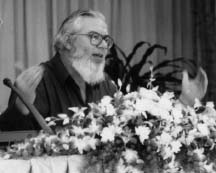 The Governing Body of the International Labour Organisation (ILO) elected Mr. Juan
Somavía of Chile to serve as the next Director General of the ILO. He was elected by a
vote of 44 votes for his candidacy. Mr. Somavía's five-year term of office begins on 4
March 1999.
The Governing Body of the International Labour Organisation (ILO) elected Mr. Juan
Somavía of Chile to serve as the next Director General of the ILO. He was elected by a
vote of 44 votes for his candidacy. Mr. Somavía's five-year term of office begins on 4
March 1999.
On the occasion of his election at the top level of the ILO,the WCL which endorsed his candidature ,sent Somavia a message of congratulations whereby ,on behalf of all its members, it expresses great satisfaction. Underlining the very important job he has done before, during and after the Social Summit, the WCL hopes also that the ILO should continue to be a driving force in order to consolidate the organisation as a fundamental instrument in the defence of social and workers rights. Therefore he can count on the fraternal but evenso critical support of the WCL. Invited as a guest speaker during the recent WCL Congress in Bangkok, his remarkable and appreciated intervention on the social effects of globalisation stimulated an animated discussion.
An attorney by profession, Mr. Somavía has had a long and distinguished career in civil and international affairs, serving, inter alia, as Chairman of the preparatory Council of the World Summit for Social Development (held in Copenhagen in 1995) and President of the UN Economic and Social Council (from 1993 to 1994). He has held the post of Ambassador of Chile and served as an Adviser to the Foreign Minister of Chile on Economic and Social Affairs. He is currently Permanent Representative of Chile to the United Nations in New York, a position he has held since 1990. He recently served as Representative of Chile in the UN Security Council. He was born on 21 April, 1941 and earned degrees in law and economics from the Catholic University of Chile and the University of Paris.
76th year, number 1998/2
http://www.cmt-wcl.org/en/pubs/labor98-2.html
info@cmt-wcl.org
WCL conducts mission to South Asia TopA WCL delegation, represented by Secretary General, Willy Thys, and Confederal Secretary, Necie Lucero, conducted a mission to Bangladesh, Pakistan and India last 16-26 March 1998. Both WCL representatives were given a very warm reception by the host member organisations. The mission made it possible to acquire experiences in the field and to gain a better insight into the political and socio-economic context in which our affiliates have to work. The delegation seized the opportunity to make practical arrangements about the kind of support needed to improve and to extend the union activities.
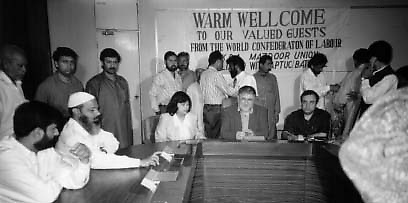 During their visit to Bangladesh which was hosted by the BSSF, two conferences
took place. These were the Conference of SMP -the BSSF Women’s Commission- and the
Congress of Transport -the BSSF Trade Federation for Transport Workers. There were series
of meetings with the BSSF Executive Board, the newly elected officers of the Women’s
Commission and with the Minister of Labour of Bangladesh. Visits were also made to their
headquarters and support centre in .
During their visit to Bangladesh which was hosted by the BSSF, two conferences
took place. These were the Conference of SMP -the BSSF Women’s Commission- and the
Congress of Transport -the BSSF Trade Federation for Transport Workers. There were series
of meetings with the BSSF Executive Board, the newly elected officers of the Women’s
Commission and with the Minister of Labour of Bangladesh. Visits were also made to their
headquarters and support centre in .
In Pakistan, the delegation was met by the APTUC members and officers. There were two conferences held in Karachi and Lahore where reports of activities and plan of actions were presented and discussed. There were also meetings with three organisations applying for affiliation with the WCL. These were the Pakistan Labour Federation, South Asia Labour Organisation and Pakistan Rural Workers Social Welfare Organisation. In view of WCL's concerns to extend its activities to the social movement, the delegation visited the farmers/members of APTUC in Lahore. As a sign of their appreciation, the Secretary general was given a present, symbolising their high respect for the work done by the WCL. It also expresses their strong hope that WCL together with BATU will continue their efforts in improving the working and living conditions of agricultural workers. The delegation also met with officers of NILAT, an institution in Pakistan in-charge of labour education and training.
During their stay in India, the delegation graced the occasion of the CFTUI State Congress in Delhi. Representatives from BATU and the SAARC region joined the delegation. The whole delegation went to Patna, Bihar where they met members and officer of CFTUI-Bihar. On this occasion, a meeting of the CFTUI Executive Board met with the presence of representatives coming from different states of India. Various visits to different projects of CFTUI, Bihar followed.
76th year, number 1998/2
http://www.cmt-wcl.org/en/pubs/labor98-2.html
info@cmt-wcl.org
The currency turmoil in Asia TopSince the middle of 1997, the currencies of a number of Asian countries has been suffering from substantial speculative attacks. In order to stop the outflow of foreign capital and to restore international confidence, the International Monetary Fund stepped in with several so-called "structural adjustment programs". Although it is true that that the currency crisis had to be tackled, these structural adjustment programs will undoubtedly result in lower growth, higher unemployment and increasing poverty rates in most of these countries. According to the ILO
Much to the envy of other developing countries and even some industrial countries, several countries of Southeast Asia were able to realise spectacular growth rates in recent years. Growth rates of an average of 8% enabled these countries to raise employment and real incomes, thereby reducing poverty. However, the increase in added value and in national income reflected itself also in imports from the rest of the world. Unfortunately, since the growth of income in Europe and Japan fluctuated around historical lows, the increase of South East Asian imports was not matched by an increase in exports from South East Asia to the rest of the world. The result was a high and growing deficit on the trade balance. Countries in Southeast Asia were continuously relying on loans in foreign currencies in order to finance their yearly recurring trade deficit. In the end, it appeared that this process of importing more than one could afford and thereby building up an ever increasing foreign debt was no longer tenable. International financial markets became aware of the risks involved in extending further foreign currency loans to the Asian ‘tiger’ economies and decided to cut the credit lines. The Thailand trade deficit, reaching no less than 7.5% of GNP in ‘97, was in that respect a red flag for financial markets.
The results of this massive loss of confidence are known. Speculative attacks and an outflow of capital resulted in an enormous fall in the value of the currencies involved, reaching 40 % or more and even 80% for the Indonesian Rp. In turn, this exchange loss sky-racketed the dollar value of the debt, thereby lowering further the prospects of repayment of the foreign debt. Due to the currency turmoil, private companies sometimes incurred losses equivalent to six times the net worth of the company. The danger of an (international ) credit ‘crunch’ in which Southeast Asia would no longer be able to raise (foreign) capital and in which these countries would be isolated from the rest of the world economy, was becoming real.
World-wide unbalanced growth is one factor explaining the trade deficit and the resulting currency turmoil of Southeast Asia. However, it is not the only factor. Several policy errors by the countries itself have been made :
The spectacular growth effort and the resulting investment had to be financed. Despite the fact that the countries involved generally have very high (gross) saving ratios (about one third of GNP) and low government deficits, the national saving was not enough to cover the investment involved. So, firms turned massively to short term foreign lending, thereby increasing the vulnerability of the system to international markets. In some cases, long term investment was financed by three month lending.
As in the case of Mexico and other South-American countries, the dollar peg of the Asian currencies played a vicious role. Most Asian governments pegged their currency to the dollar in the middle of the eighties, when a depreciation of the dollar occurred. The further depreciation of the dollar in the nineties increased the competitive advantage and resulted in a new ‘boom’. Inversely, the new increase in the value of the dollar since ‘96-’97 eroded the competitive position of the countries and giving way to a new increase in trade deficits.
Moreover, the dollar peg gave a false impression of security. Banks thought that they could safely borrow dollars at a low interest rate and lend the money further to national firms at an higher interest rate. In order to maximise profits from this scheme, banks stimulated firms and private persons to invest massively, even in projects which were not economically viable . In turn, the increased liquidity in the economy raised asset prices (‘property lending’) giving once again a false feeling of increased welfare and thereby increasing consumption and imports.
The rhythm of expansion of GNP and investment itself has been exaggerated by other forms of domestic economic policy. In Korea, the intimate relationships of governments with industrial groups (known as ‘chaebol’) were used in ‘93 to ‘order’ industrial groups to invest more, thereby creating surplus production capacity and the debt overhang. In other cases, the lack of good governance resulted in massive infrastructure projects with low economic utility.
‘Growth is no longer the issue, mere survival is’
Confronted with a currency and financial crisis, the first reaction from the Fund is to try to restore confidence of international investors in the currency and the economy in general. In doing so, the Fund hopes to break the vicious circle in which depreciation causes an explosion of the dollar denominated debt, thereby causing a further fall in the currency. In the short run, the only instrument available is to restrict domestic demand by cutting purchasing power from the public. This come down to tackling the government deficit by raising taxes and cutting public expenditure, even when deficits are already at a low level.
On this point, the IMF has had to endure certain criticisms, even from the side of the chief economist of the World Bank (J. Stiglitz). These criticisms point out that the debt overhang in Asia does not result from the public sector with its history of low budget deficits but from the private sector. Therefore, they argue that the solution is not to be found in a ‘classical’ down-sizing of government. On the contrary, such public downsizing would only push economies into recession and deflation, thereby aggravating the problem of private debt overhang. Al-though the risk for recession or low growth is indeed very serious, this criticism fails to see the argument that a contraction of the dynamics of economic activity will automatically slow down imports. Together with increasing exports (competitive advantage from the depreciated currency) this will lead to a drop in the trade deficit, hence giving international financial markets the signal that the country has embarked on a determinate course to tackle its currency deficit. And once confidence is restored, international credit becomes available again, pushing the currency value higher again and bringing the value of the debt back under control. However, a related and more fundamental criticism is that pushing all countries collectively into a recession may be very blunt. Since trade between Southeast Asian countries is heavily interrelated, the outcome of a joint cut in domestic demand might well be a severe drop in imports, being followed by a severe drop in exports to neighbouring countries. The impact on the trade deficit may therefore be much less pronounced.
This ‘stabilization’ component is however completed with structural reform. Some parts of the structural reform program aim to help to cope with the debt overhang and to restore confidence, other parts aim to prevent a rehearsal of the scenario.
In some countries, for example Korea, there exists a tradition of lifelong employment. This tradition makes it difficult for enterprises to retrench workers. In order to enable firms to restructure themselves, to increase profits which then can be used to re-capitalize the enterprise, labour law would have to be adjusted in order to make mass redundancies possible.
A certain part of the debt overhang, resulting from the private sector, can be tackled by letting the firm or the bank go bankrupt. Provided that other firms take over the assets of the bankrupt firm, this need not be at the expense of employment. In this case, the cost would be paid by the (international) lender. This would be a certain price that should be paid for extending loans on an unsound basis. It would also be a signal to financial markets that not all of the debt would be ‘bailed-out’, thereby introducing incentives to financial markets to be much more careful in the future.
Foreign financial institutions will only invest money and bring foreign currency into the country provided that investors have reasonable certainty that the capital involved can be repatriated. In order to signal the possibility of repatriation, a deregulation of capital controls would be appropriate. In other words, in giving the possibility of capital export, the IMF hopes to draw in more capital imports. It goes without saying that these measures have to be taken with prudence. A direct effect, at least in the short run, could even be more capital flight. Moreover, experience shows that not all capital import is in the long run beneficial for the country. Renewed dynamics of three month foreign loans would ease the immediate problem but could present again a certain danger in the future.
Another way to draw in foreign currency in order to re-establish confidence on the financial markets is to allow foreign firms to become major shareholder of national enterprises. Moreover, firms that have gone bankrupt under the giant debt situation could thus be taken over and being backed with new capital. This is the reason why for example the new president in Korea is considering to privatise companies and sell them on the international market.
Last but not least, the reform of the financial sector is vital. The financial sector should be made more transparent and brought under some form of control in order to avoid that financial intermediaries re-play the same game by basing a future expansion of the economy once again on short term foreign loan. (RJ)
76th year, number 1998/2
http://www.cmt-wcl.org/en/pubs/labor98-2.html
info@cmt-wcl.org
Indonesian workers: victims of the crisis and the
ongoing repression TopThe dismissal of some 7 million workers, the sharp rise in the prices of essential food items and the ongoing repression of human and trade union rights led the last months to several protest actions and rallies across Indonesia resulting in the detention of several hundreds of unionists, NGO-militants and student leaders. With the new wave of repression the totalitarian regime wants to tackle a growing strategic alliance between opposition movements, in which the SBSI, our Indonesian affiliate, is playing a key role.
As a result of the economic crisis and prolonged drought (cfr. ‘El Niño), human suffering in Indonesia is on the increase. Last February the Indonesian Ministry of Manpower announced that unemployment had jumped to 8 million from 2.5 million in mid 1997. But that figure is a very optimistic interpretation of reality taking into account that in Indonesia anyone having worked an hour in the previous week is classified as employed. Others, like M. Pakpahan referring to the more than 17 million dismissals, estimate that more than 30 % of the active population is without a job at present.
Although some special efforts are undertaken by the Ministry of Social Affairs, the lack of an accurate social protection system means that millions of jobless Indonesians have now no other outcome than to build up a living in the informal urban sector or to return to the rural areas they left at the end of the 1980’s when the economic boom started. But there is more than the sudden high unemployment figures. Also the real incomes for those who still have a job are falling. Many workers accept wage cuts in order to save their jobs. The number of people living below the poverty line is increasing very fast as the prices of essential food and non-food items are rising. So it is no surprise that the dissatisfaction is very high and that the highly corrupt and authoritarian regime as well as Suharto himself are tagged as those responsible in the first place.
 Rekson Silaban, head of the international department of SBSI : "As SBSI
militants we want in the first place our union to be recognised. We ask further for more
transparency and less arbitrariness of government and of course more real participation in
the socio-economic policy. Many workers want such changes and with the SBSI we tighten the
links between all those workers who believe in another future. By doing so we make work of
an independent workers’ front that cannot be ignored anymore. But we are also looking
for a stronger collaboration between all the actors of the civil society. If we really
want a more democratic society, we need to build up a stronger pro-democracy movement too.
This implies that we have to look what us, genuine unions, progressive non-governmental
organisations -NGO’s- and student movements bind together. The fact that we all want
the food price rises stop as well as the lay-outs; the fact that we want to dispose of
more civil liberties such as a freedom of association and expression; the release of
Pakpahan and other union leaders; all those are elements that can help to create that
unity."
Rekson Silaban, head of the international department of SBSI : "As SBSI
militants we want in the first place our union to be recognised. We ask further for more
transparency and less arbitrariness of government and of course more real participation in
the socio-economic policy. Many workers want such changes and with the SBSI we tighten the
links between all those workers who believe in another future. By doing so we make work of
an independent workers’ front that cannot be ignored anymore. But we are also looking
for a stronger collaboration between all the actors of the civil society. If we really
want a more democratic society, we need to build up a stronger pro-democracy movement too.
This implies that we have to look what us, genuine unions, progressive non-governmental
organisations -NGO’s- and student movements bind together. The fact that we all want
the food price rises stop as well as the lay-outs; the fact that we want to dispose of
more civil liberties such as a freedom of association and expression; the release of
Pakpahan and other union leaders; all those are elements that can help to create that
unity."
Late in February, the SBSI invited several NGO’s and student organisations for a meeting. Like before, the union confederation wanted to explore the possibilities of holding a common demonstration during the general meeting of the Indonesian People Council. But the students (like 30 years ago politically very active) were legally not allowed to leave their campus. Nevertheless, big protest meetings were prepared for the 9th of March, hoping that also students could participate. That day (Suharto was just been elected for a 7th term of office), numerous security forces occupied strategic positions and surrounded the university buildings. During the rallies, the military detained more than 500 activists. Later on, 156 were charged of having violated legal prescriptions dealing with anti-political activities (cfr. Pen Pres n° 5 of 1963 and UU n°5 of 1969). They all will be committed for trial. Amongst the accused : 11 SBSI leaders.
 Didik Hendro, vice-director of the education and training department of SBSI : "We
knew such things could happen and that there would be a price to pay. We believed the
latest General Meeting was a good moment to let the representatives know how deep the
workers are affected by the crisis. We want them to listen to our grievances and demands.
With all the preparatory work, this and other demonstration gave the possibility to build
the SBSI as movement and as structure but also to make some steps forwards in the making
of a broader and more structured pro democracy movement. The increasing risk to be
detained (from the 1st till the 11th of March rallies were strictly forbidden because of
the General Meeting) was no problem at all. On the contrary, the determination and the
spirit among the SBSI members to go on is still growing."
Didik Hendro, vice-director of the education and training department of SBSI : "We
knew such things could happen and that there would be a price to pay. We believed the
latest General Meeting was a good moment to let the representatives know how deep the
workers are affected by the crisis. We want them to listen to our grievances and demands.
With all the preparatory work, this and other demonstration gave the possibility to build
the SBSI as movement and as structure but also to make some steps forwards in the making
of a broader and more structured pro democracy movement. The increasing risk to be
detained (from the 1st till the 11th of March rallies were strictly forbidden because of
the General Meeting) was no problem at all. On the contrary, the determination and the
spirit among the SBSI members to go on is still growing."
The continuous commitment of the SBSI leaders is highly appreciated by the workers. More and more they believe that SBSI can make a difference. Because of the impact on the working population, SBSI contributes to a changing mentality in other sectors too; as for example inside the government authorised trade union confederation, the FSPSI.
 André Maramis, chairman of the BATU-Indonesia group : "Some trade union
leaders inside the FSPSI will say now that Muchtar Pakpahan is a genuine trade union
leader. It is a fact that he fought and even in prison he is doing a lot of things for the
workers. Not all the members of the FSPSI are against the SBSI. And we as BATU-group
inside that confederation, we emphasise that SBSI, although with another strategy, is
helping and defending the workers too. We keep saying that SBSI is a combative movement
and that we can learn from them."
André Maramis, chairman of the BATU-Indonesia group : "Some trade union
leaders inside the FSPSI will say now that Muchtar Pakpahan is a genuine trade union
leader. It is a fact that he fought and even in prison he is doing a lot of things for the
workers. Not all the members of the FSPSI are against the SBSI. And we as BATU-group
inside that confederation, we emphasise that SBSI, although with another strategy, is
helping and defending the workers too. We keep saying that SBSI is a combative movement
and that we can learn from them."
In the past decade very little was done by the regime to keep social progress in line with economic development. This is also the consequence of the fact that democratic trade unions as well as other participative institutions reflecting a functioning civil society were not allowed. In such a context, industrial elites, very often protected by the authorities in exchange of bribes, don't take seriously the trade union rights. Help and solidarity from abroad is necessary.
Didik Hendro : "First of all we need technical assistance to help us with our training and education projects. We want to explain the workers that labour rights are human rights. A lot of them do not know their rights. They never heard of international labour standards or basic human rights and that those international agreements should also be reflected in our national labour legislation. Through our programs we stimulate them to take part in union activities; by doing so they are better prepared to face and denounce abuses or to negotiate collective agreements. Secondly we need financial help. Although there is a lot of sympathy for our work, membership is growing slowly. Those who have still a job are afraid to loose it. Becoming a member of the SBSI can provoke a dismissal they want to avoid. But also because of the crisis, it is difficult for us to collect member’s fee. Also political pressure from abroad is very welcome. We want to dispose of a legal status and function as a recognised but authentic and independent union. Taking into account the high population figures of Indonesia and more specifically the great number of workers, the SBSI can become a very strong union that in the future can help WCL to put pressure on other countries where trade unions are repressed; but therefore SBSI has to be recognised so that we can do our activities freely and formally. At the moment the SBSI needs all the support and solidarity it can get."
Putting pressure on the Indonesian government and denouncing human rights and trade union violations at the ILO and the specialised UN bodies is part of the WCL's strategy to help and defend the Indonesian workers. It encourages furthermore the cause of the SBSI by concrete actions and solidarity campaigns. But also via the IMF and World Bank the Indonesian regime can be put under pressure to stress the importance of tripartism in socio-economic progress. Programmes of lending to countries in balance of payments difficulty should be based on good governance, respect for human rights, increased employment and the reduction of poverty.
André Maramis : "Last February, we joined a WCL mission to Washington where we've had negotiations with top officials of IMF and World Bank. We informed them of the malpractices in Indonesia, especially how the workers are treated and how the crisis affects them. We warned the IMF and World Bank that if they do not want to be informed by the workers, they will not succeed in their mission. The current crisis in our country cannot be remedied by economic measures only; strong and positive social measures are required as well. This implies that the workers and their organisations should be involved more." (JoVe)
76th year, number 1998/2
http://www.cmt-wcl.org/en/pubs/labor98-2.html
info@cmt-wcl.org
Africa: more women in the informal economy TopThe chronic deficits on the balance of trade and payments, due chiefly to the fall in prices of raw materials and agricultural produce on the international markets, have caused an unprecedented economic crisis in the developing countries in general and in those of sub-Saharan Africa in particular. Structural adjustments and the introduction of new technologies reduce employment in the organised sector of the economy and are conducive to the accelerated extension of poverty. This state of affairs drives people to undertake alternative income-generating activities enabling them to survive. This informal sector, in that it is not lawfully organised, serves therefore as a buffer against the economic crisis. At the same time, however, it causes a perceptible decrease in trade union membership as well as a rise in the number of non-registered trade unions.
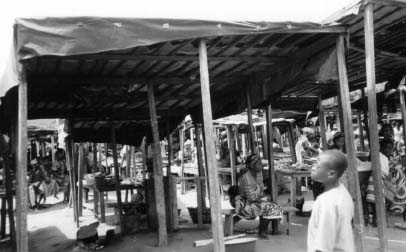 This development of activities in the informal sector is one of the faces of the
internationalised and globalised economy, marked by its many effects on the living and
working conditions of women and men. So, this sector has turned into a refuge of those who
are excluded.
This development of activities in the informal sector is one of the faces of the
internationalised and globalised economy, marked by its many effects on the living and
working conditions of women and men. So, this sector has turned into a refuge of those who
are excluded.
A thorough analysis of the informal sector and an investigation by the actors have now revealed that women are playing a key role in the dynamics of these small-scale activities. According to the ILO, more than two-thirds of the women in the urban areas of West Africa are active in this sector. The underlying reason for this is the fact that these activities are in many cases the only alternative allowing women to have an income while assuming tasks resulting from their reproductive function. All this occurs, however, without the least social and economic protection and in most cases in deplorable safety and health circumstances.
This trend is growing to the extent that this sector is feminising as poverty is.
Around 150 informal women workers in Mbour1 are getting organised with the help of the UDTS (democratic union of Senegalese workers).
They are working for their own account in the fish processing sector (drying and smoking), in agriculture, cattle breeding (milk processing) and clothing.
Thanks to their easy accessibility, these activities allow women to undertake "lucrative" activities with little resources. Some women have worked in this sector for a long time already, while others have recently entered it, driven by financial difficulties. The main causes are that the husband has lost his job (if he ever had one) and that the ¾ too low ¾ wages remain unpaid.
These activities are marked by their small size, the poor solidity of their structure and the fact that in many cases they are carried out at home or along the streets. The technologies used are very simple and require a considerable labour force. The products are meant for the local markets and depend on the law of supply and demand.
These women have to contend with countless problems: lack of starting capital to buy raw materials and the necessary equipment (textiles, cattle, fishing nets, proas, engines, drying tables, salt, refrigerators), lack of infrastructure (water, adequate shop floor, nursery), lack of knowledge of their rights, absence of access to education and training related to their productive activity, difficulty in seeking markets for their products (particularly means of transport to Dakar).
They are lacking everything that would enable them to do their work in decent circumstances. Moreover, they have to contend with the competition from those who are working at a larger scale and do have the necessary, performing equipment.
In view of this state of affairs, they have organised themselves in groups of 30 to 40 women to bring together some capital. This money enables them to buy the raw materials in sufficient quantities and at the lowest price, and to make some small investments like renting a production space on the market. Through their actions and demands they have managed to obtain from the village authorities a site on which they can build a small workshop to manufacture and sell their products. What remains to be done now is to raise the funds to build the workshop.
Despite their harsh working conditions, the poor resources at their disposal and the combination of jobs they have to do both at home and outside, they continue to advance and are determined to conquer new spaces which take account of their concerns and needs. They want to occupy a full-fledged place in society. In that they are implementing projects for the future, they show a lot of creativeness and a very developed spirit of enterprise which enable them to take up the challenges they are confronted with as women workers.
As for the trade union movement, this sector represents a huge potential of energy capable of adding to its strength. It is therefore up to the trade unions to buckle down to extending these forms of organisation and to protecting the joint interests of these groups of women workers and workers.
The UDTS, the Senegalese trade union confederation affiliated to the WCL, is working in this sense by stepping up its efforts to gain presence in the informal sector of the economy in which women are the majority. By means of awareness-raising, information and training programmes in various fields the UDTS, under the influence of its female members, intends to organise this sector and particularly the women who are making a living and providing for their children in absolutely degrading circumstances.
The UDTS is alive to the fact that the autonomy of women originates in many cases in education and training, within the framework of specific skills. It also knows, however, that it originates in awareness and in the possibility of joint action, though this possibility requires an effort of translation into terms that are pertinent to the specific target groups in question.
The women from Mbour realise that the trade union recognises them. This fact strengthens their self-confidence and allows them to occupy a space and to guide the trade union work. They venture to stem the current (of cultural prejudice) and open up new prospects both for themselves and for the trade union.
Trade unionism facing new challenges
Generally speaking, the traditional trade union operates in the formal sector. Informal workers are usually not organised in these structures and can therefore not be reached in the same way as workers within the formal sector structures. This is owing to the very nature of their work and to their priorities and problems, which in so many cases are different.
At present, a twofold marginalisation is perceptible in the trade union functions: the sector itself is considered marginal, and the vast majority of the people working in this sector are women playing a marginal role in the trade unions.
Confronted with a decrease in the number of formal sector workers, the trade unions have understood that they must not concentrate their efforts on this sector only. The will to be present in the informal sector as trade unions is therefore also a matter of survival.
So, to the trade unions it is a matter of experimenting with alternative forms of organisation. The purpose of this is to upgrade and recognise the economic activity of the women workers and workers in the informal sector and to protect their rights. It would be possible that way to arrive at an overall invigoration of the trade union activities, and the women in this sector could occupy spaces in the organisation in sharing their viewpoints and realities.
It is increasingly obvious that the expansion of trade unionism among women having precarious jobs requires innovating strategies on the part of the trade unions as well as of their activists. From this perspective, joint actions focused on education, training and income-generating projects become necessary instruments for raising the awareness of the workers.
The efforts some trade unions have made already prove to be insufficient. It would be necessary for each trade union to work out a specific project. Such projects need to be based on previous experiences, adjusted to the different realities, and they have to take into consideration, at the level of methodology, the fact that women in the informal sector are in many cases isolated and illiterate, left unprotected by the law.
Trade unions will only become useful to the extent that they enable these women to tackle the problems that are placing them in vulnerable social and economic positions. Not until trade unionism has integrated this and adjusted its practice accordingly, it will be possible to mobilise the women working in the informal sector with a view to their social and economic independence. Only under these conditions trade unionism will manage to develop.
More and more trade unions are growing aware of the importance of women in the informal sector. As a consequence, an ever-growing number of organisational experiences are being led to a favourable conclusion. Nevertheless, a more general and more explicit approach will be necessary to bridge the gap between trade unionism and women working in the informal sector. (KP)
1 Mbour lies in Senegal at 80km from Dakar
76th year, number 1998/2
http://www.cmt-wcl.org/en/pubs/labor98-2.html
info@cmt-wcl.org
Latin America: Increasing social exclusion TopAccording to the 1997 Report of CLADEHLT (Latin-American commission for human rights and freedoms of the workers and peoples), more than 50% of the Latin-Americans do not have a stable job and work in precarious and marginal activities. The minimum wage enforced in the urban areas is equivalent to 72% of its level in 1980. The persecution and violation of the labour laws are going on to such an extent that 123 union leaders were killed in 1997 in Colombia.
With very recent data on housing, employment, education, food, health and exclusion, this report of CLADEHLT shows a realistic view of living and working conditions of the Latin-American workers. The results of the socio-economic research (at a regional and national level) confirm that the process of social exclusion and insecurity of employment as well as the violations of the rights and the freedoms of the workers and their organisations persist. It is obvious that the neoliberal model is not the way to follow. "The recipes (elegant form to set out the "impositions") of the world economic and financial trilogy (IMF, WB and WTO) have not been useful and will not be useful to settle the huge contradictions in the region."
In a "decalogue of despair", CLADEHLT, member organisation of CLAT, has summed up the indicators of poverty and violation of the labour laws that mark the everyday life of the women workers and workers in Latin America and the Caribbean.
Notwithstanding this worrying panorama, the workers' organisations affiliated to CLAT/CMT continue to take a very active part in promoting and defending the alternative models of development in which human beings would be the centre of all societal tasks. (JoVe)
76th year, number 1998/2
http://www.cmt-wcl.org/en/pubs/labor98-2.html
info@cmt-wcl.org
WCT Congress: Role of teachers in education for the
21st century TopTo an organisation like the World Confederation of Teachers ¾ WCT, an international trade federation of the WCL, a Congress has a twofold function: learn lessons for the future from assessing the past. The 7th WCT Congress stresses clearly the first option: define the framework of reference in order to build the future.
 It is with this end in view the WCT has drawn up a policy report which, starting from
the changing society, goes into the role of education and teachers in the changes
worldwide. Education fits in society through a game of interactions providing it with its
functional and its essential character. Tomorrow, in the knowledge society, education will
be playing this role with even greater intensity and importance.
It is with this end in view the WCT has drawn up a policy report which, starting from
the changing society, goes into the role of education and teachers in the changes
worldwide. Education fits in society through a game of interactions providing it with its
functional and its essential character. Tomorrow, in the knowledge society, education will
be playing this role with even greater intensity and importance.
The 45th UNESCO International Conference on Education in Geneva, in the autumn of 1996, was about "Reinforcing the Role of Teachers in a Changing World". Referring to the resolutions of its previous Congress in Dakar and to the work it has done since, the WCT took an active part in the UNESCO International Conference on Education, presenting amendments with the end in view of improving the resolutions and recommendations already agreed. During that Conference, much attention had already been paid to the report the International Committee on Education for the 21st Century (the Delors Committee) had presented. This last document, the resolutions of the International Conference on Education and the Report, to the UNESCO, of the World Commission on Culture and Development, entitled "Our Creative Diversity" and written by Pérez de Cuellar, constitute the cornerstones of our reflection. Some people have even called this a new paradigm.
The globalisation of the world economy, the rapid technological progress and the social changes we have observed in recent years lead us to believe that we are developing towards new forms, new structures and new systems of education, indeed at an accelerated rhythm.
These influences indeed affect society’s expectations of education and teachers, but also the role of teachers in education and society. Today, moreover, we note a greater involvement of many social groups wanting also a say in the changes within education. This evolution may prove to be positive, for the school is occupying an increasingly central place in society. Yet, it also holds the potential risk of deviating education from its fundamental role.
Teachers, confronted with all these in some case contradictory developments, are in search of a redefined identity and adjusted role. This is why the WCT intends to seize the opportunity of its Congress to give teachers from all over the world the opportunity to express their opinion and to confront them with the views of their colleagues.
Within this framework of profound changes, it would also be useful to reconsider the role, structures and action of the teachers’ unions. Should we not open the field of action of teachers to other social groups while, without falling in the trap of corporatism, and, instead, focus our action on the protection of the education and teaching profession personnel?
Globalisation causes not only the political borderlines, but also the borders between people to fade. On the other hand, we note that, precisely as a result of this rapprochement, social groups are more than ever in search of their socio-cultural identity. As a matter of fact, we have also noted that we arrive at the same fundamental questions about the same issue, while starting from different socio-cultural situations.
It will be the purpose of the WCT Congress to identify these questions and to set the basic principles bound to help us seek solutions adjusted to the socio-cultural reality of each and everyone. (GD)
7th WCL Congress
Date: 6-11 August 1998
Place: Kuala Lumpur (Malaysia)
Theme: Role of Teachers in Education for the 21st Century
76th year, number 1998/2
http://www.cmt-wcl.org/en/pubs/labor98-2.html
info@cmt-wcl.org
Transport in a period of globalisation TopThe transport sector is currently undergoing far-reaching reforms. These adaptations are at the root of the globalisation process. As is the case with the other sectors of economy, the transport sector also discovers the negative impact of what it helped to bring into being.
The International Federation of Trade Unions of Transport Workers of the WCL (FIOST) observes that the lifting of trade barriers has given an enormous impetus to the development of new and modern transport systems. Those have in turn accelerated the current globalisation process. Contrary to what happened in the past, it is now much easier to completely or partially siphon production processes towards other countries. Factors allowing this relocalisation of production centres are, on the one hand, low transport costs and, on the other hand, low wage bills. Making the most of those market characteristics is at the root of an even greater exploitation of the labour force. Therefore, FIOST questions not only the low social assessment of the transport element but also the impact on the environment, which is rarely taken into account.
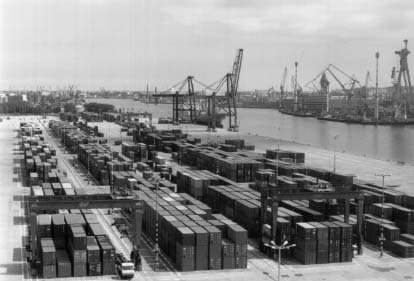 As regards the impact of the scientific and technological revolution on the transport
sector, there's a lot to be done. The introduction of ultramodern techniques and the use
of new transport management techniques have a not insignificant influence on this job
relocation and the worsening of working conditions. FIOST and its affiliated organisations
are not against modernisation in itself but they seriously question such a transport
evolution that only takes into account the laws of the market, to the detriment of the
rights of the workers and the environment.
As regards the impact of the scientific and technological revolution on the transport
sector, there's a lot to be done. The introduction of ultramodern techniques and the use
of new transport management techniques have a not insignificant influence on this job
relocation and the worsening of working conditions. FIOST and its affiliated organisations
are not against modernisation in itself but they seriously question such a transport
evolution that only takes into account the laws of the market, to the detriment of the
rights of the workers and the environment.
In many transport sectors and always in order to diminish the costs, trade skills are constantly belittled. The most striking example of this is that of civil aviation, where big airline companies entrust more and more airport operations to temporary staff, who are insufficiently trained for the task they have to perform. Sooner or later, this evolution will put into danger the security not only of the passengers but also of the staff. This happens not only in third-world airports but very often in rich countries too.
Nowadays, merchant ships are built that require minimal staff on board. Indeed, some ships of 4,000 tons or more only require the third of the staff formerly needed to operate the vessels. Under the pressure of cost calculation, working conditions have really deteriorated down to an unacceptably low level.
Privatisation, presented by the advocates of globalisation as the solution par excellence, is another permanent issue of grievance for FIOST. Everywhere, and in the Third-World too, even profitable and strategic transport means are privatised. In Mexico and Argentina, where the best railways networks were to be found in the past, multinationals have taken over. They only operate goods transportation for export and have completely neglected the less profitable passenger transport sector.
For FIOST, this means that globalisation, as it is operated today, only answers the laws of the market. According to FIOST, those laws are a constraint not only for human development but also for the social objectives FIOST pursues, in its capacity as an international transport organisation. In the view of FIOST, accepting without questions the economic models in which the role of free market is considered as the only solution constitutes a modern form of slavery where working relationships are subjected to the jumps, interests and pragmatism of raw capitalism.
In preparation for its congress, scheduled for next year, FIOST will work on clarifying the social framework of these evolutions in the transport sector. The congress will also deal with the theme "working in the transport sector ". (FP-JV)
76th year, number 1998/2
http://www.cmt-wcl.org/en/pubs/labor98-2.html
info@cmt-wcl.org
The multilateral agreement of investment - MAI 16
TopA brief history
Experts of the Organisation for Economic Co-operation and Development — OECD, which unites the 29 richest countries of the world, have been preparing this agreement since 1995 already. They did so with utter discretion. The negotiations should have resulted in the agreement being signed in April 1998. This was not possible, however, considering the growing criticism of the project from almost everywhere, which had been strongly accentuated since the high-level top officials meeting in Paris, on 16-17 February 1998.The OECD Ministerial Council in Paris (27-28 April 1998) did not decide to abandon the MAI, but to officially postpone the negotiations until October 1998. In the final declaration of that meeting, the ministers "reaffirm the importance they attach to the establishment of a global multilateral framework for investment containing high standards of liberalisation and protection of the investment".
The WCL reminds, however, that the non-governmental organisations and various trade union, social, … associations were the first to express their resistance to the MAI. They drew the attention of the governments to the risks signing such an agreement would hold. As we explained in our Teleflash of 15 February (n° 49), such an agreement would indeed leave the field clear to the multinational enterprises, to the detriment of the states, the peoples and particularly the workers.
A MAI for what purpose?
The purpose of the Agreement is to remove a maximum of obstacles, barriers and hindrances to investment. In other words, it ensures the protection and liberalisation of investment. It is the equivalent, for investments, to the worldwide agreements concluded under the patronage of the General Agreement on Tariffs and Trade (GATT) to lower the barriers to the goods and services trade. The World Trade Organisation (WTO), which was constituted in 1995 in substitution for the GATT, guarantees the freedom of international trade, even if its bodies do not yet represent all the member countries. The purpose of the MAI is to do without these representation bodies and to remove the few barriers to the total freedom of production and circulation: social protection, resources administration, public services, respect for the environment, local, regional or national interests, preservation of culture, … The WTO occupies itself with products and their circulation, the MAI with production activities, meaning investments.
Out of the 100 first powers on the planet, 51 are multinational enterprises, and 49 states. One-third of the world trade is done between branches of one and the same enterprise, another third between various transnational enterprises. The MAI now aims to protect the rights of the foreign investors, for its establishes the principle of non-discrimination between domestic and foreign investors. It guarantees legally both the investment itself and the action of investing. This could induce the governments to stretch their national regulations even more. Moreover, it allows to challenge the laws, regulations and administrative practices operative at all the levels of the state. In fact, the states would have practically no control anymore over either the large groups or the nature of the investments. So, they would lose control over their future, and the economic liberalisation worldwide would be ensured.
In view of this danger, the WCL and the other opponents of the Agreement stress the labour and environmental issues and demand the insertion of a binding social clause covering the national and basic labour standards. Indeed, still under the stipulations of the Agreement, the states must not formulate some requirements of foreign investors, eg the employment of a minimum number of local staff. Nor must they grant subsidies just to national investors by way of job creation incentive. The workers would be even more subject to arbitrariness as far as the minimum wages and decent working conditions are concerned, which runs counter to the codes of good conduct decreed especially for the multinational enterprises. The trade unions have pointed out to the governments the dangers of economic and social deregulation by the MAI, demanding that the protection of the workers should be guaranteed and the signatory countries should be forbidden to lower, for the sake of investments, the national labour standards and not to respect the internationally recognised basic workers’ rights. At its latest Congress, assembled in Bangkok in December 1997, the WCL had already decided to continue its action to effect that the international labour standards, and the so-called core standards in the first place, are taken up as such in a possible Multilateral Agreement on Investment.
Besides the liberalisation and protection of investment, the mechanism regulating disputes constitutes another key point in the Agreement.
The compulsory procedure to settle differences, as proposed in the Agreement, applies when problems arise not only between the host state and the state of origin, but also between the investor and the host state. This means that multinational enterprises would have the right to summon governments to appear before an "international court", ie a special body to settle disputes, whereas the citizens, the governments, would have no recourse whatsoever to defend themselves against the multinational enterprises.
The developing countries, for their part, would find themselves practically forced to accept the Agreement en bloc, once it is finalised. They could also reject it, of course, but in order to attract foreign capital, they is no other option left to them than to sign it, whereas some countries, eg Mexico, the Philippines and Colombia, had succeeded in maintaining foreign investment restrictions on matters such as development bank institutions and the destruction of toxic waste. These countries could not control their natural resources, their bank system and the development of their telecommunications anymore. The Agreement will add to the inequalities between North and South. Only a few strong countries like China and India would be able to oppose.
Bound for two decades
The stipulations of the MAI, once adopted, are operative during at least five years. After that period, they cannot be changed anymore during 15 years. This implies that a country having ratified the MAI cannot back out of it until after 20 years. Even then it would be subject to various constraints. Initially, the Agreement had to be aimed at all the branches of activity and apply to all fields that were not specifically excluded or did not benefit from a national exemptions for some vital branches of the national economy. This is why a number of countries want to introduce corrections or exceptions to the project in order to improve the national protection. The original Agreement provided for little national exemptions, merely a "status quo" (after having signed the Agreement, a state must not demand additional exemptions) or a "dismantling" (the exemptions should be gradually abolished). This would give liberalisation a further boost.
WCL POSITION
In view of the threats of socio-economic deregulation and the downturn of the workers’ rights as a result of the MAI project, the WCL reaffirms the universality of rights for all. This implies that the rights of private investors must go hand in hand with the workers’ rights while respecting the sovereignty of the states.
Facing the dangers of the MAI, the WCL demands:
In the opinion of the WCL, the efforts to build a global economy through the MAI must go hand in hand with respect for the international labour standards. Moreover, they must be controlled by a democratic and multilateral worldwide authority, otherwise the social injustice will continue.
For a world-wide constitutional state The WCL is convinced that only a constitutional state covering all the aspects of life in society can guarantee an equitable and democratic society, a constitutional state the powers of which extend to the entirety of its activities. It will therefore continue its action in order to achieve that:
|
76th year, number 1998/2
http://www.cmt-wcl.org/en/pubs/labor98-2.html
info@cmt-wcl.org
Free days cannot become working days TopIn the Netherlands, the action "Take time to live" in March and April, collected hundreds of thousands of signatures against the progress of 24 hours-a-day economy. This action is an initiative of around twenty church associations united within the Commission for Inter-church Contact in Public Affairs, but also supported by numerous social organisations and movement, notably the CNV, affiliated to the WCL. Through their action, the churches want to make people aware of the fact that going on with the 'economisation' of social life harms the individuals and the whole social environment. They warn that this evolution damages the quality of life in society and decreases the social time free for contacts with family and friends, for association life and voluntary work. It also limits the possibilities of attending religious services and celebrations on Sunday and generates haste and stress, adds the Commission. Precisely because men are increasingly at risk of becoming an economic product, FETRALCOS, the Latin-American trade union of employees affiliated to CLAT, has launched the action 'Domingo NO' a few years ago.
At its last Congress, the international trade union of employees of the WCL, the World Federation of Clerical Workers (WFCW), has also treated the issue and proposed that free religious holidays, such as Sundays for example, cannot become working days. "If we want to prevent our society from becoming a society of individualists or that some groups of workers are marginalised, everything must be done within labour to keep free religious days as days of rest. So much so that, as a matter of principle, Sundays are normally ruled by other standards and laws than normal working days".
As a matter of fact, it cannot be dismissed that working on Sunday has a very negative impact on social life: the moments family can pass together are more and more reduced; sport clubs are obliged to put up with members that cannot play on Sundays and social organisations experience a sharp decrease in voluntary workers. In the meantime, however, it is the worker who bears the pressure. If people do not wish to work on Sunday, they are quickly accused of not being able to integrate in the team and they miss promotion opportunities. Even during job interviews, the applicant is more and more often asked whether he is ready or not to work on Sunday. To be or not to be ready to work on Sunday has become a selecting criterion. Moreover, it is to be observed that employers do not use their permanent workers on Sunday. Because of bonuses, it is too expensive. They rather use cheap labour (the students for example), who are insufficiently trained and unable or poorly able to carry out some tasks. This results in poor service to the client and lower quality. Permanent workers must then make up for the mistakes on Monday, which means an increased workload to them. The great majority of the workers do not want to work on Sunday or in the evening. They nevertheless are very numerous in taking advantage of the fact that shops are open on Sunday. They rush to the shops : it this a lack of solidarity? A sign of cultural poverty ? Maybe there simply are no other moments to do, with all family members concerned, the important purchases ?
The WFCW and its affiliated organisations follow the issue. They are fully aware of the fact that traditional rest moments (free Sundays) are more and more put into question. Otherwise, why should some economic interests put such a pressure to extent the laws on shops opening hours?
But is it really necessary, from an economic point of view, that even more shops be open on Sunday or is this what employers would like us to believe, that's what has the WFCW wondering. It is too often inferred that this imposed deregulation means more flexibility. This is completely untrue, according to Piet Nelissen, executive secretary of the WFCW. "Scientific research show that workers are only willing to answer the wish for flexibility of their employer if there is a legal framework, if working conditions are clearly defined.In those countries where the laws protecting the workers are inefficient, labour flexibilisation leads to greater exploitation of the human labour force".
To oblige the employers to have more consideration for fundamental social, religious and ethical conditions, the FCG/GPA, the Austrian organisation affiliated to the WFCW, has lately launched a large-scale information campaign. In its widely distributed leaflets, it shows that the weekend is the moment par excellence to visit family and friends, undertake some activities with the whole family, maintain social contacts and recharge one's batteries. This action calls for debate but also generates the setting up of a front : The economy must be in the service of man, not the opposite. (JV).
76th
year, number 1998/2
http://www.cmt-wcl.org/en/pubs/labor98-2.html
info@cmt-wcl.org
Sites related to articles in this issue of Labor
Magazine Top1) Globalization and the MAI - information centre :
http://www.islandnet.com/~ncfs/maisite/homepage.html2) http://www.monde-diplomatique.fr/md/dossiers/ami/index.html
3) MAI information page : presents arguments for and against the MAI
http://darwin.bio.uci.edu/~sustain/issueguides/MAI/index.html
